China
China stretches across East Asia from the Pacific coast to high plateaus and mountain ranges in the west. The Himalayas rise along its southwestern edge, while the Gobi and Taklamakan deserts occupy parts of the north and northwest. The Yangtze and Yellow rivers cross broad plains and basins, and the country’s landscapes also include karst hills, subtropical forests, grasslands, and a long eastern coastline.
India
India stretches across South Asia, from the Himalayas in the north to a broad peninsula between the Arabian Sea and the Bay of Bengal. The Ganges and Brahmaputra plains spread below the mountains, while the Thar Desert lies to the west and the Deccan Plateau covers much of the southern interior. Its landscapes also include the Western Ghats, tropical forests, long coastlines, and island groups off both sides of the peninsula.
Indonesia
Indonesia stretches across the equator between the Indian and Pacific oceans, forming an archipelago of thousands of islands. Its largest islands and island regions include Sumatra, Java, much of Borneo, Sulawesi, and the western half of New Guinea. Volcanic mountain ranges rise across many of the islands, while tropical rainforests, coral seas, and long coastlines shape landscapes from Java’s volcanoes to the forests of Sumatra and New Guinea.
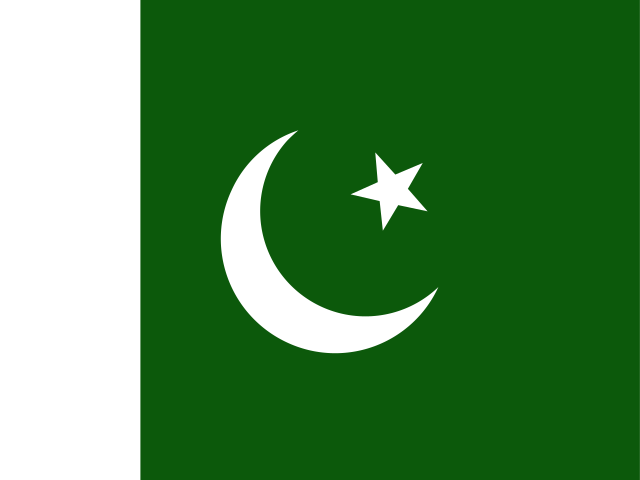
Pakistan
Pakistan stretches from the Arabian Sea across the Indus River plain to the high mountains of the north. The Karakoram, Himalaya, and Hindu Kush meet there, and the Karakoram contains K2, the world’s second-highest mountain. Farther south, the landscape includes the Balochistan Plateau, the Thar Desert, fertile plains along the Indus, and a coastline of beaches, bays, and rocky headlands.
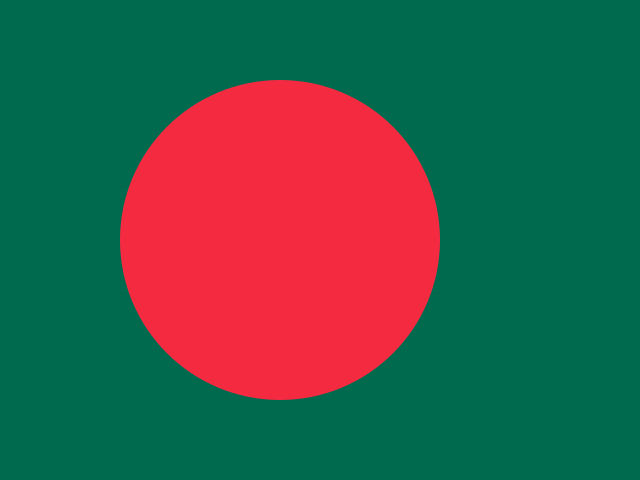
Bangladesh
Bangladesh lies across the vast Ganges-Brahmaputra-Meghna delta, where rivers and smaller waterways cross broad, low-lying plains. The Bay of Bengal shapes its southern coast, including the mangrove forests and tidal channels of the Sundarbans. In the southeast, the hills around Chattogram rise above the plains, adding wooded slopes, valleys, and lakes to a landscape otherwise defined mainly by water and fertile delta land.
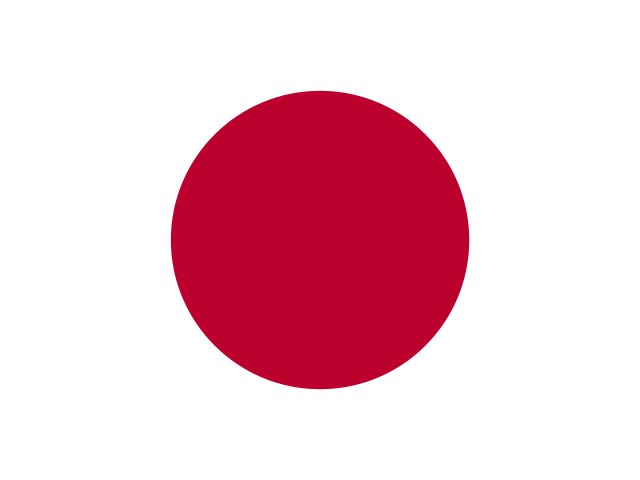
Japan
Japan is an island country in East Asia, extending in a long arc along the Pacific coast of the continent. Its four main islands—Honshu, Hokkaido, Kyushu, and Shikoku—are joined by thousands of smaller islands, with mountains covering much of the land. Mount Fuji rises west of Tokyo, while forests, volcanic lakes, and deeply indented coastlines shape the landscape from the cool north to the subtropical south.
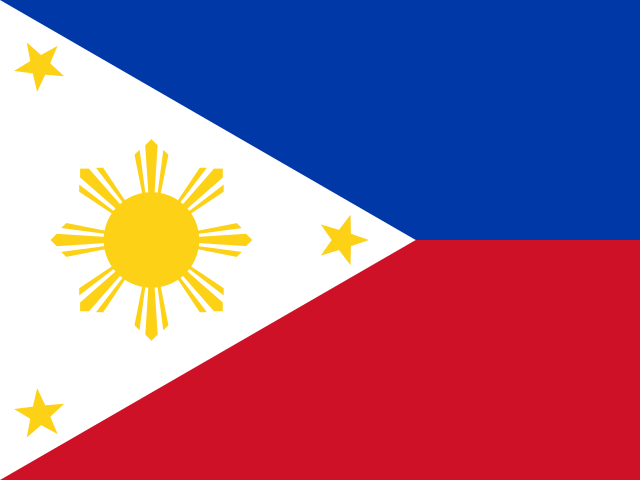
Philippines
The Philippines is an archipelago in the western Pacific, made up of thousands of islands grouped broadly into Luzon, the Visayas, and Mindanao. Volcanic mountains rise across many of the larger islands, while long coastlines, coral reefs, and deep bays shape the surrounding waters. Its best-known landscapes include the limestone cliffs and lagoons of Palawan, Bohol’s Chocolate Hills, and Mount Apo, the country’s highest peak.
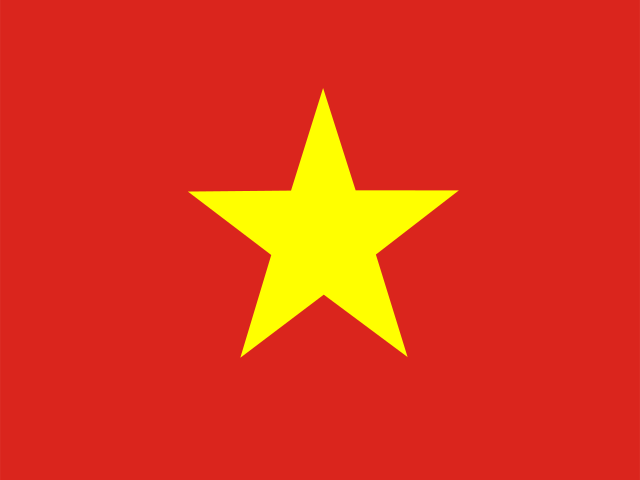
Vietnam
Vietnam is a long, narrow country in Southeast Asia, with mountains rising across much of the north and west and a long coastline following its eastern side. The Red River Delta surrounds Hanoi in the north, while the Mekong Delta spreads through the far south in a network of rivers and wetlands. Its landscapes also include limestone islands in Ha Long Bay, the central highlands, forests, and sandy beaches.
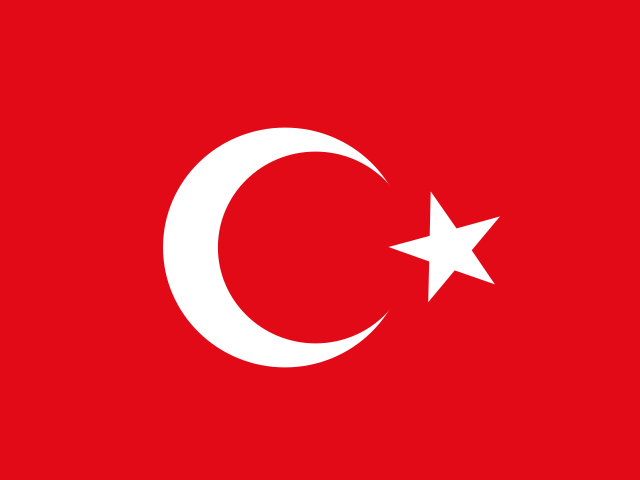
Turkey
Turkey stretches across the Anatolian Peninsula and a smaller area in southeastern Europe, between the Black Sea and the Mediterranean. The Pontic and Taurus mountains frame a broad central plateau, while long coastlines curve around the Aegean and Mediterranean seas. Farther inland, the rock formations of Cappadocia and the waters of Lake Van add to the country’s varied landscape.
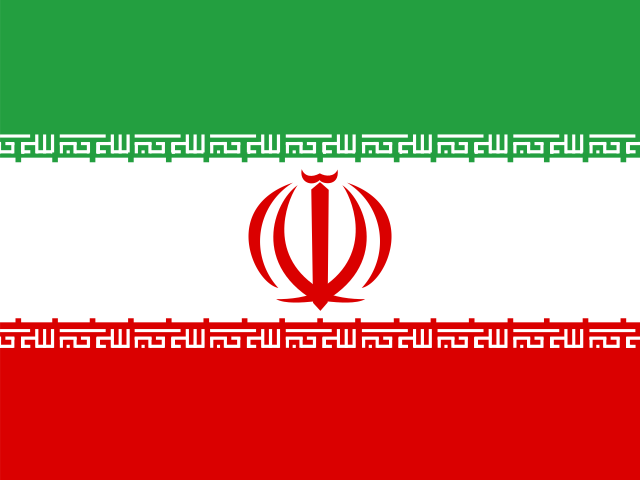
Iran
Iran lies in Southwestern Asia, with a broad central plateau framed by the Zagros Mountains in the west and the Alborz Mountains in the north. Much of the interior is occupied by the Dasht-e Kavir and Dasht-e Lut deserts, while greener forests line the southern shore of the Caspian Sea. Its landscapes also include volcanic Mount Damavand and long coastlines along the Persian Gulf and Gulf of Oman.
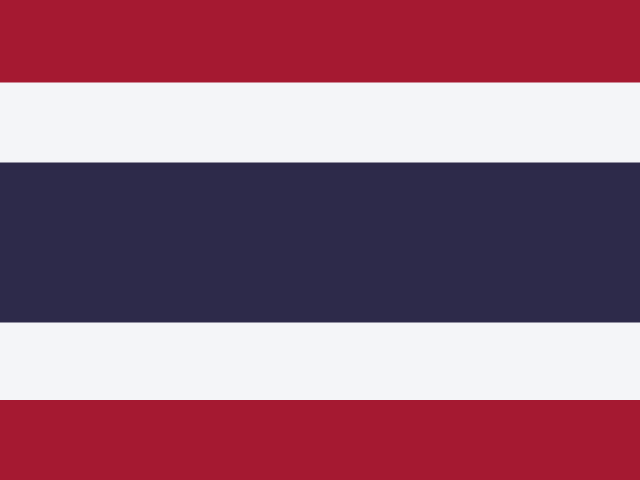
Thailand
Thailand lies in mainland Southeast Asia, stretching from forested mountains in the north across the Chao Phraya plain to the long Malay Peninsula. The Mekong follows much of its eastern edge, while the Gulf of Thailand and Andaman Sea border its southern coasts. Limestone cliffs, tropical islands, mangrove forests, and beaches shape landscapes around Krabi, Phang Nga Bay, and the southern archipelagos.
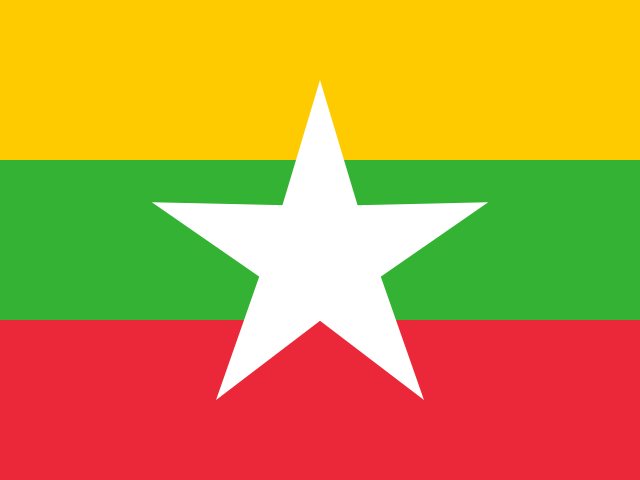
Myanmar
Myanmar lies in Southeast Asia, with a long coastline facing the Bay of Bengal and the Andaman Sea. The Irrawaddy River runs through the broad central lowlands before spreading into a wide delta near the coast. Mountain ranges rise in the north and west, while the Shan Plateau covers much of the east and the Mergui Archipelago extends along the southern shoreline.

South Korea
South Korea occupies the southern part of the Korean Peninsula, with coastlines on three sides and thousands of islands lying mainly off its western and southern shores. Mountains cover much of the interior, while wider plains spread along the west and south. Jeju Island, formed by volcanic activity, is home to Hallasan, the country's highest mountain.
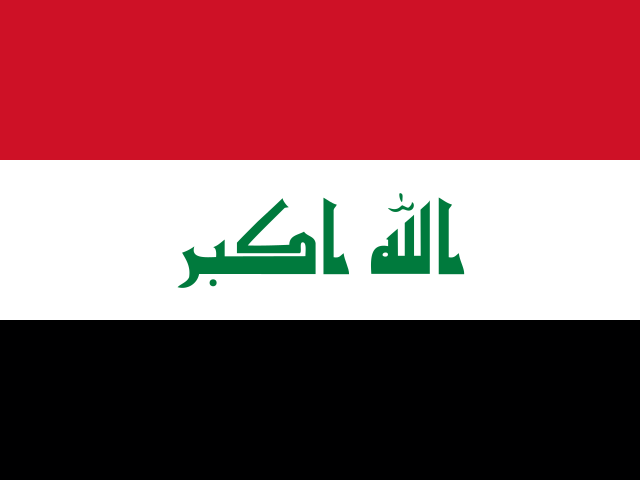
Iraq
Iraq lies in western Asia, where the Tigris and Euphrates flow southeast across the broad Mesopotamian plain. Mountains and foothills rise in the north and northeast, while dry plateaus and desert cover much of the west and south. Near the lower reaches of the rivers, lakes, reed beds, and wetlands form the Mesopotamian Marshes before the two rivers join and continue towards the Gulf.
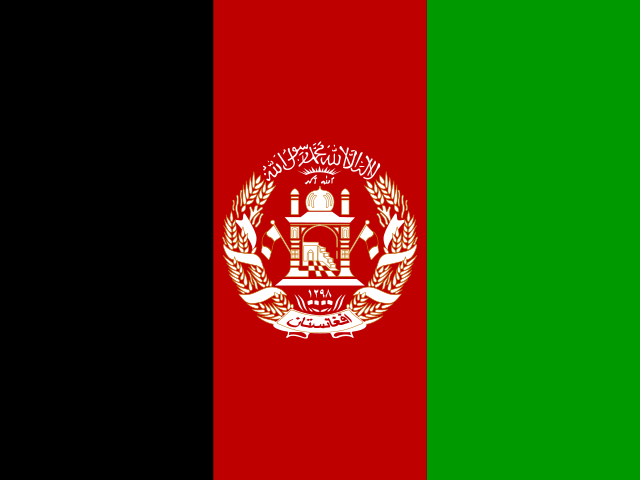
Afghanistan
Afghanistan is a landlocked country in Central and South Asia, shaped by high mountains, broad valleys, and dry plateaus. The Hindu Kush runs across much of the country, with narrow passes and peaks rising above deep river valleys. Farther north, the land opens into plains, while deserts and rocky basins extend across the south and southwest.
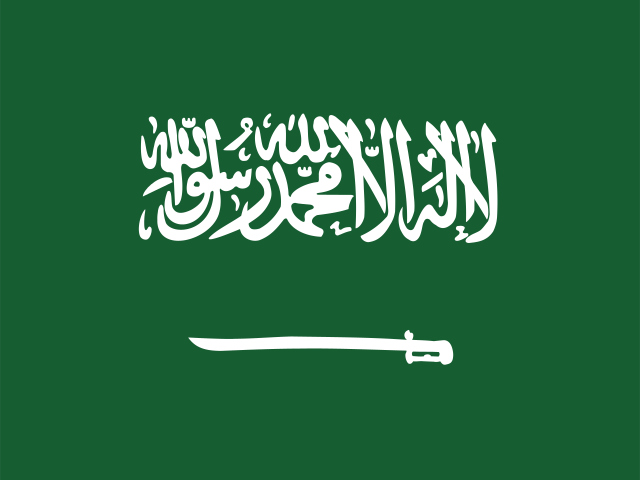
Saudi Arabia
Saudi Arabia covers most of the Arabian Peninsula, with coastlines on the Red Sea and the Persian Gulf. Vast deserts dominate the interior, including a large part of the Rub' al Khali, one of the largest continuous sand deserts in the world. Along the west, the Hejaz and Asir mountains rise above narrow coastal plains, while volcanic fields, rocky plateaus, and scattered oases add further variety.
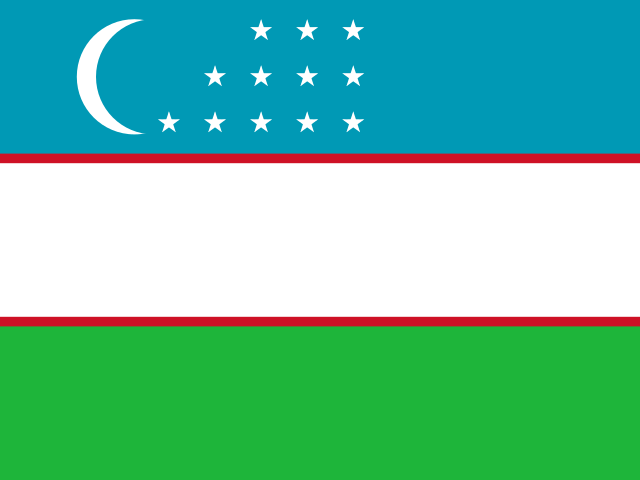
Uzbekistan
Uzbekistan lies in Central Asia, where broad deserts and dry plains cover much of the country. The Kyzylkum Desert stretches across the north and centre, while the Tian Shan foothills and the fertile Fergana Valley shape the east. The Amu Darya and Syr Darya cross the wider region, supporting greener valleys and oases among the arid landscapes.
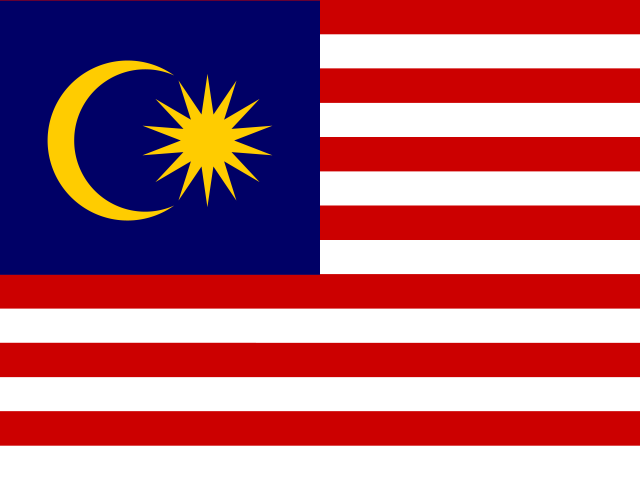
Malaysia
Malaysia lies in Southeast Asia, with one part on the Malay Peninsula and another on the island of Borneo, separated by the South China Sea. Much of the country is covered by tropical rainforest, with mountain ranges, limestone caves, mangrove coasts, and long sandy beaches. Mount Kinabalu rises above northern Borneo, while rivers wind through the forested interior and out towards the sea.
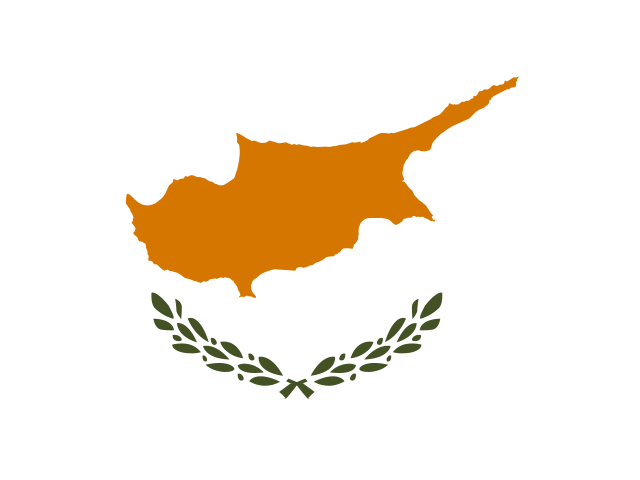
Cyprus
Cyprus lies in the eastern Mediterranean, with a coastline of sandy bays, rocky headlands, and sheltered coves. The Troodos Mountains rise across the centre and southwest of the island, reaching their highest point at Mount Olympus, while the narrower Kyrenia Range runs close to the northern coast. Between them, the broad Mesaoria plain extends across the interior of the island.
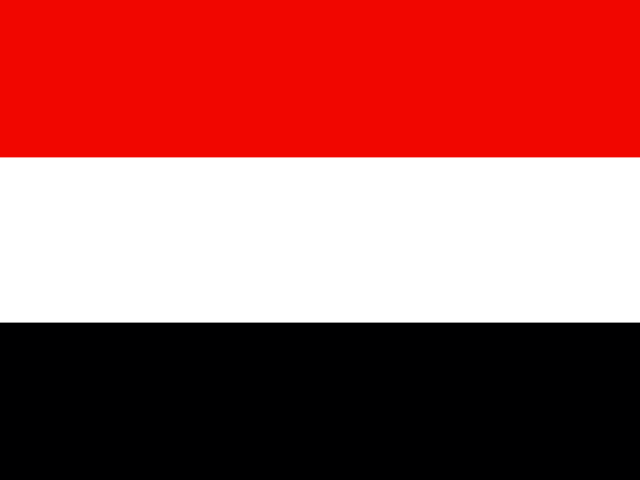
Yemen
Yemen lies at the southern end of the Arabian Peninsula, with coastlines along the Red Sea, Gulf of Aden, and Arabian Sea. In the west, the flat Tihama coastal plain rises sharply into high mountains and broad upland basins, before the land slopes east towards arid plateaus and desert. The country also includes the Socotra archipelago, known for its limestone landscapes and distinctive plant life.
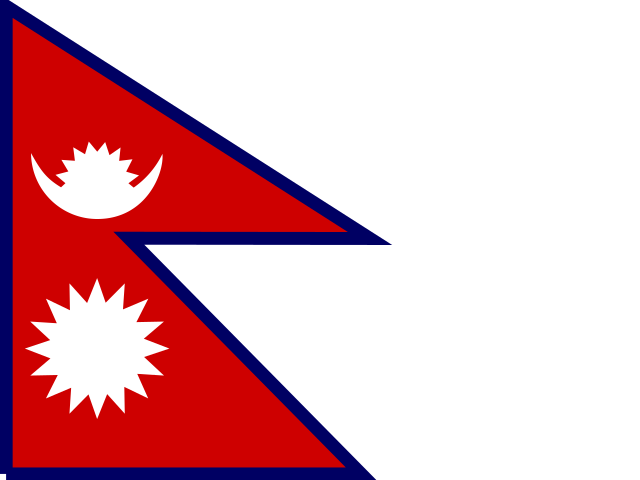
Nepal
Nepal rises from the lowland Terai plains to the high Himalayas, creating one of the world's steepest changes in elevation across a relatively short distance. Eight of the world's fourteen highest mountains stand within the country, including Mount Everest, while deep river valleys cut through the ranges. Forests, alpine meadows, glaciers, and high-altitude lakes shape the landscape between the plains and the peaks.
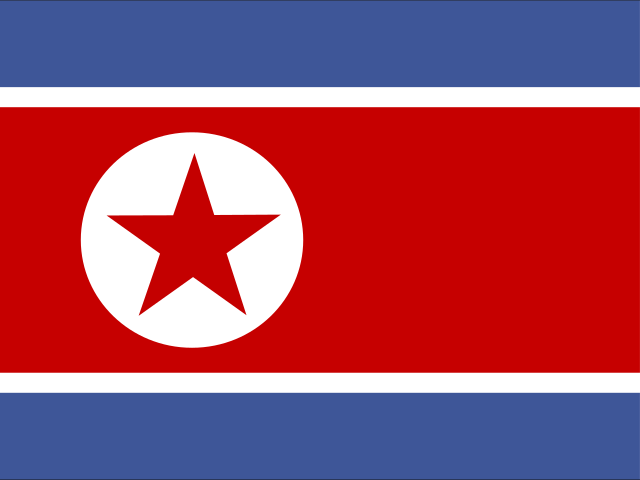
North Korea
North Korea occupies the northern part of the Korean Peninsula, with coastlines on both its eastern and western sides. Mountains and forested uplands cover much of the country, while wider plains lie mainly along the western coast. Mount Paektu, the country’s highest peak, has a lake in its volcanic crater, and numerous rivers run from the interior highlands towards the sea.
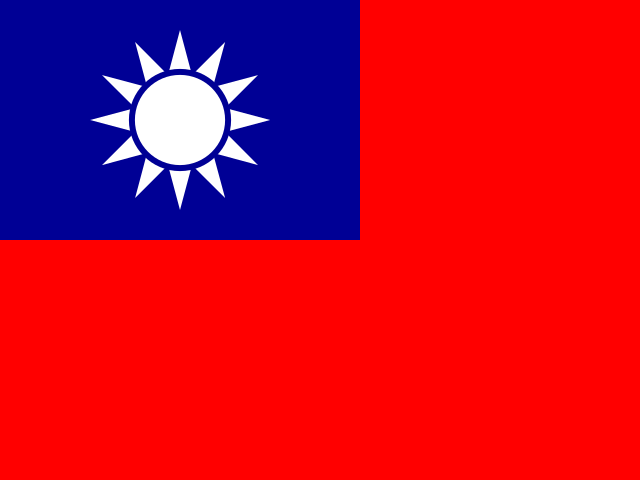
Taiwan
Taiwan is an island in East Asia, lying between the East China Sea, Philippine Sea, and South China Sea. Mountain ranges run along much of its eastern side, rising to the summit of Yu Shan, while broad plains stretch along the western coast. Its landscapes also include steep gorges, forested slopes, volcanic terrain in the north, and smaller islands scattered across the surrounding waters.
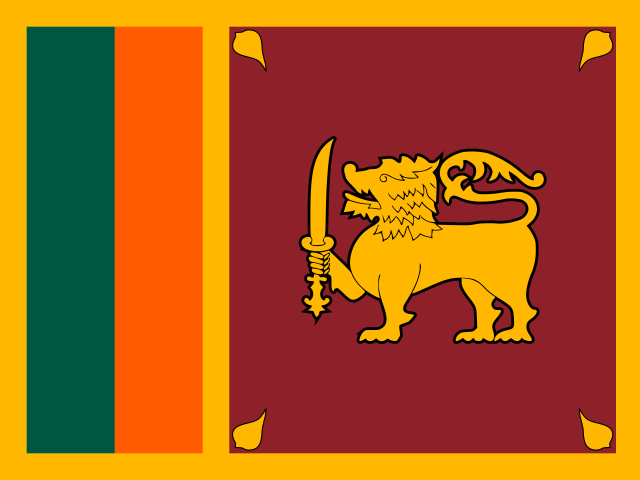
Sri Lanka
Sri Lanka is an island in the Indian Ocean, just southeast of India's southern tip. A central highland region rises around peaks such as Pidurutalagala and gives way to broad plains, rivers, lagoons, and long stretches of coast. Rainforest covers parts of the southwest, while drier plains, forests, and wetlands extend across much of the north and east.
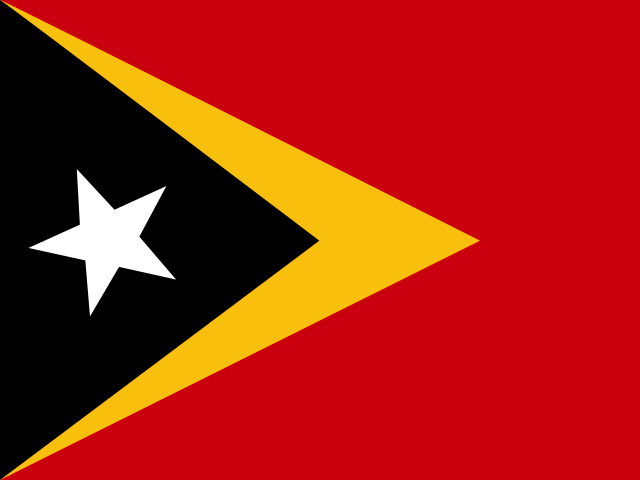
Timor Leste
Timor-Leste lies in Southeast Asia, with most of its land on the island of Timor and the smaller islands of Atauro and Jaco. A rugged mountain chain runs through its interior, rising to Mount Ramelau, while short rivers descend through steep valleys towards the coast. The north has narrow coastal plains and a drier landscape, while broader plains and greener forests are found along parts of the south.
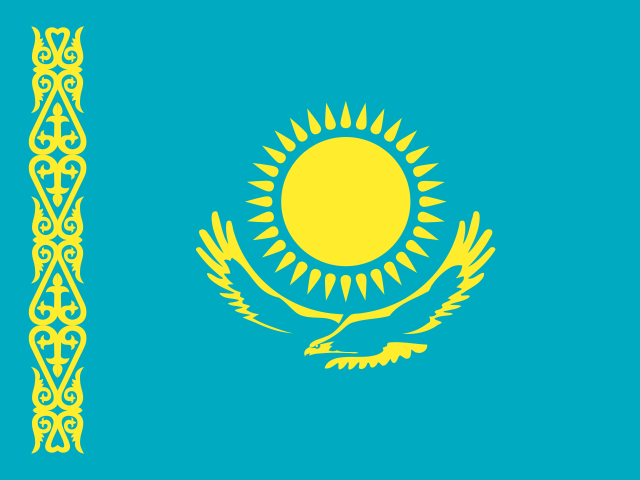
Kazakhstan
Kazakhstan stretches across Central Asia, from the shores of the Caspian Sea in the west to the Altai Mountains in the east. Vast grasslands cover much of the country, while the Tian Shan rise along the southeast and Lake Balkhash lies across the central steppe. Charyn Canyon, with its steep rock formations, cuts through the landscape east of Almaty.
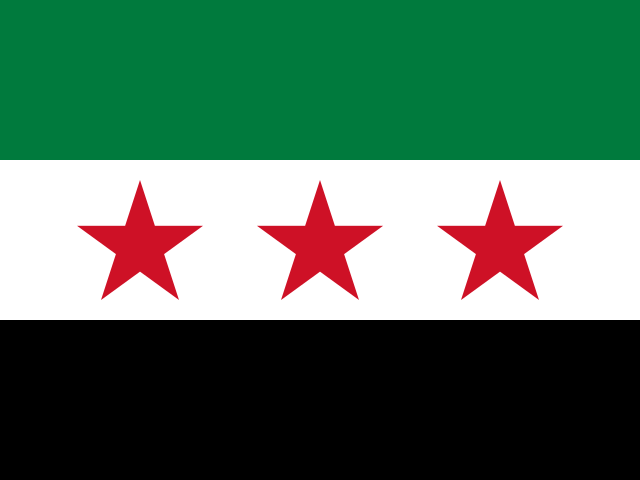
Syria
Syria lies at the eastern end of the Mediterranean, where a narrow coastal plain rises into mountain ranges running parallel to the sea. Inland, the landscape opens into broad plains and dry steppe, crossed in the east by the Euphrates River. Fertile valleys and Mediterranean hills give way to the Syrian Desert, while the Orontes and Khabur rivers shape other parts of the country.
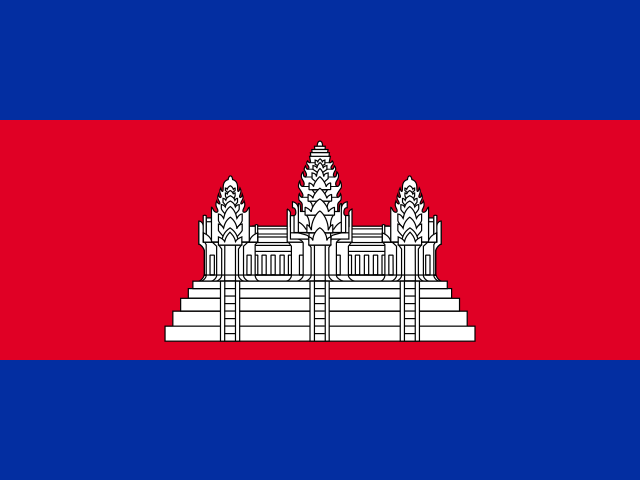
Cambodia
Cambodia lies in Southeast Asia, with broad lowlands shaped by the Mekong River and Tonlé Sap, the region’s largest freshwater lake. Forested uplands rise in the north and east, while the Cardamom Mountains stretch across the southwest towards the Gulf of Thailand. Near Siem Reap, Angkor Wat and the surrounding temple complex stand among the country’s most recognisable landmarks.
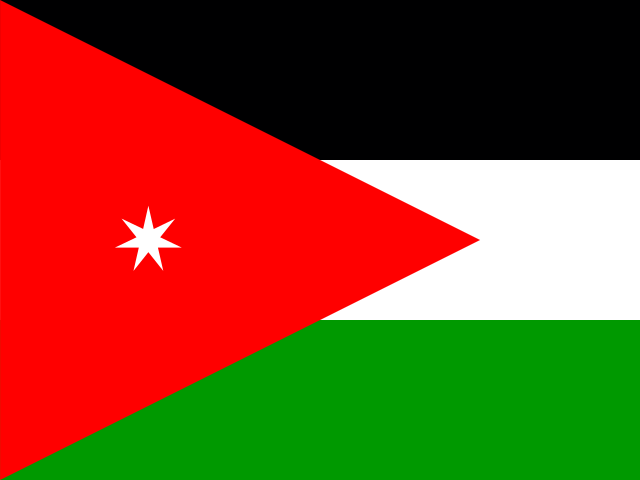
Jordan
Jordan lies in Western Asia, where dry plateaus and desert landscapes cover much of the country. The Jordan Rift Valley drops sharply in the west, reaching the shores of the Dead Sea, the lowest exposed land on Earth, while Wadi Rum is shaped by sandstone mountains and broad valleys. Farther south, a short coastline at Aqaba opens onto the Red Sea.
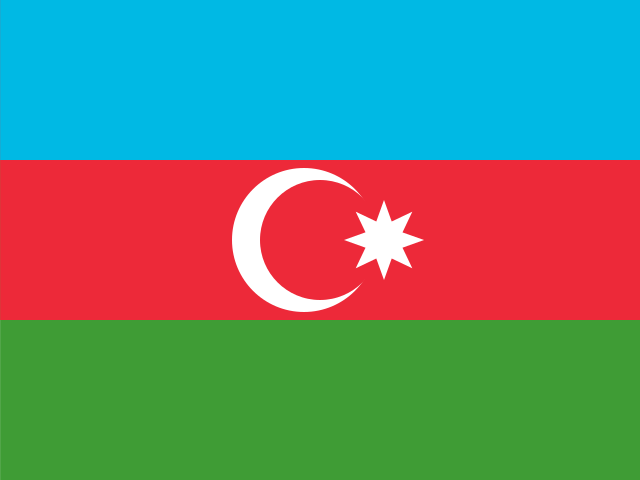
Azerbaijan
Azerbaijan lies along the western shore of the Caspian Sea, where the coastline meets broad plains and dry, semi-desert landscapes. The Greater Caucasus rises across the north, while the Kura and Aras rivers cross the central lowlands on their way towards the sea. Further south, the Talysh Mountains and lush Hyrcanian forests contrast with the mud volcanoes and rocky terrain found around Gobustan.
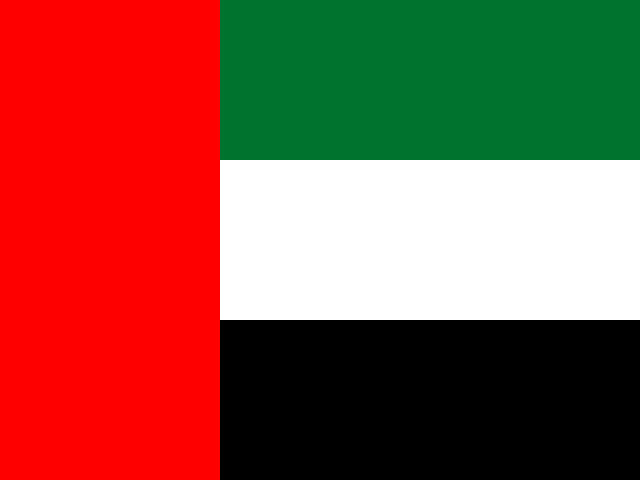
United Arab Emirates
The United Arab Emirates lies on the Arabian Peninsula, where a low coastal plain meets the desert interior. Sand dunes, gravel plains, salt flats, and scattered oases shape much of the landscape, while the Hajar Mountains rise sharply in the east. Shallow coastal waters contain numerous islands and tidal inlets, and mangroves grow along parts of the shoreline.

Tajikistan
Tajikistan is a landlocked country in Central Asia, with mountains covering most of its territory. The Pamir Mountains rise across the east, while the Fann Mountains, deep valleys, and high-altitude lakes shape the west and centre. Glaciers and mountain snow feed the Panj and Vakhsh rivers, which pass through narrow valleys before meeting to form the Amu Darya.
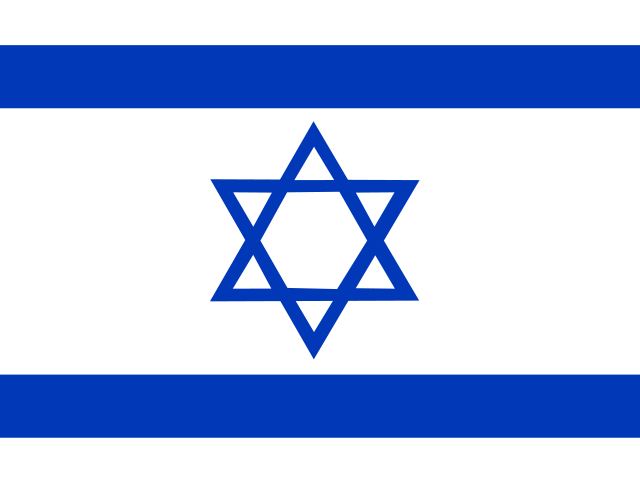
Israel
Israel lies along the eastern Mediterranean, where a narrow coastal plain rises into hills and uplands farther inland. The landscape changes quickly from the green slopes of Mount Carmel and the valleys of the north to the dry Negev in the south. Its best-known natural features include the Dead Sea, the Sea of Galilee, and the steep cliffs and erosion craters of the desert.
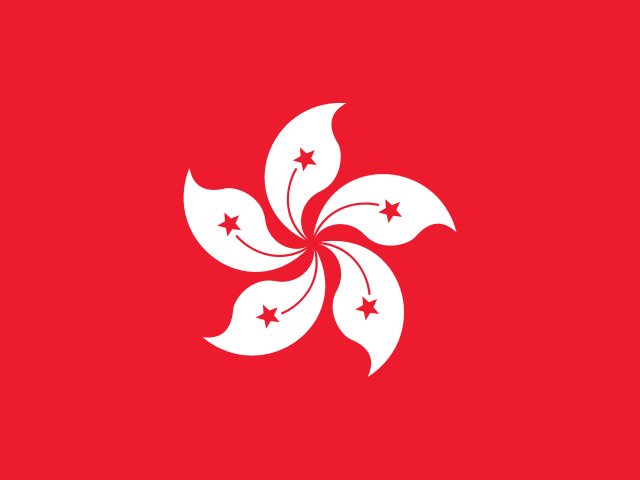
Hong Kong
Hong Kong lies on the coast of the South China Sea, where a rugged peninsula and more than 250 islands meet sheltered bays and narrow channels. Steep hills and mountains cover much of the land, including Tai Mo Shan, its highest peak. The landscape also includes rocky shorelines, sandy beaches, wetlands around Deep Bay, and country parks crossed by forested ridges and valleys.
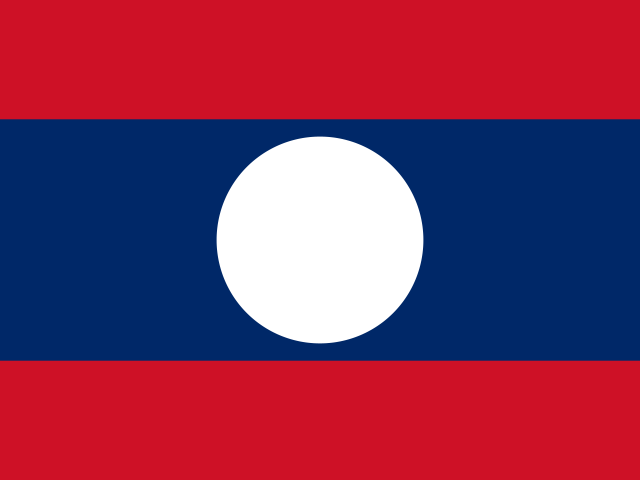
Laos
Laos is a landlocked country in Southeast Asia, shaped by forested mountains, high plateaus, and river valleys. The Mekong runs along much of its western side, while many tributaries cross the interior and support broad floodplains in the south. Its natural landscape includes limestone karst, caves, waterfalls, and the Bolaven Plateau, known for its cooler highlands.
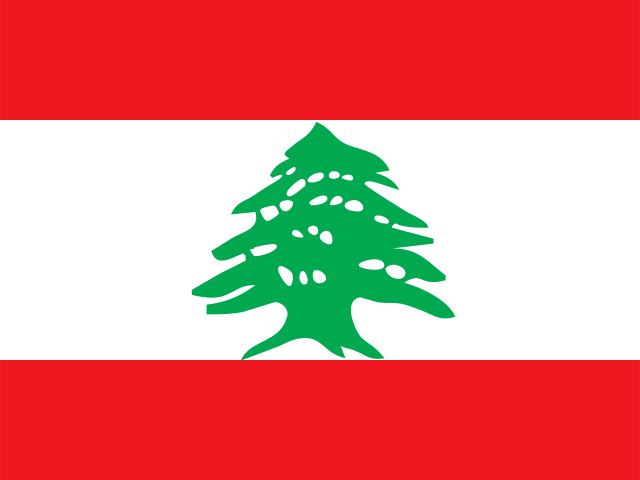
Lebanon
Lebanon is a small country on the eastern Mediterranean, where a narrow coastal plain rises quickly toward the Lebanon Mountains. Beyond the high ridges lies the Bekaa Valley, followed by the parallel Anti-Lebanon range in the east. Its compact landscape includes limestone peaks, cedar forests, river valleys, and a coastline of rocky headlands and sandy bays.
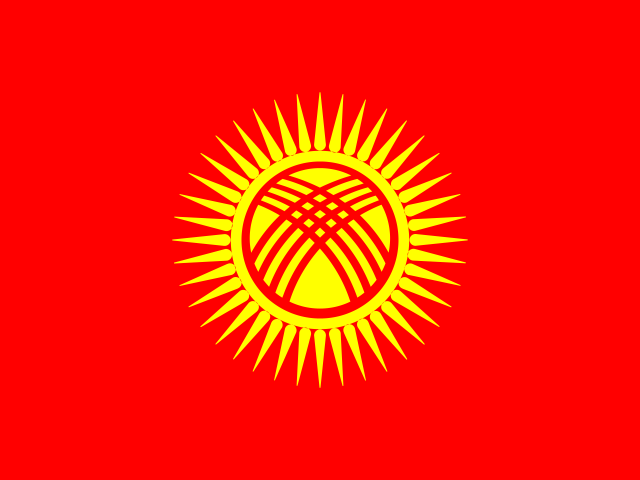
Kyrgyzstan
Kyrgyzstan is a mountainous country in Central Asia, with much of its landscape shaped by the Tien Shan range. Snow-covered peaks, glaciers, and high valleys extend across the country, while broad grasslands open between the mountain chains. In the northeast, Lake Issyk-Kul lies in a deep basin ringed by mountains and fed by rivers descending from the surrounding slopes.
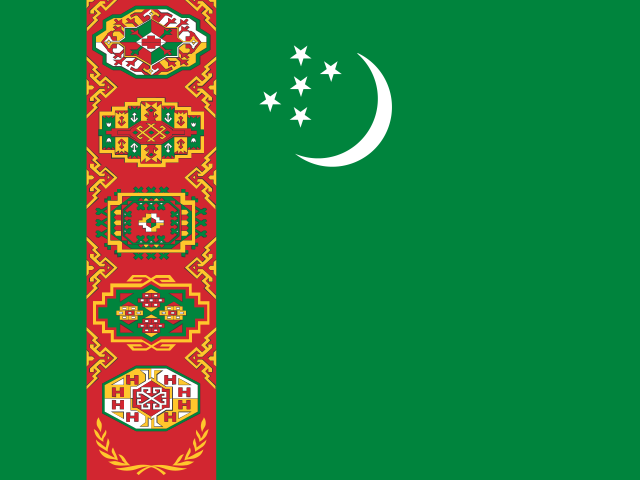
Turkmenistan
Turkmenistan lies in Central Asia, with the Karakum Desert covering much of its broad, dry interior. The Kopet Dag Mountains rise in the south, while the Caspian Sea lines its western coast and the Amu Darya flows through the east. Beyond the desert plains, the country includes colourful canyons, salt flats, and pockets of irrigated land around its rivers and oases.
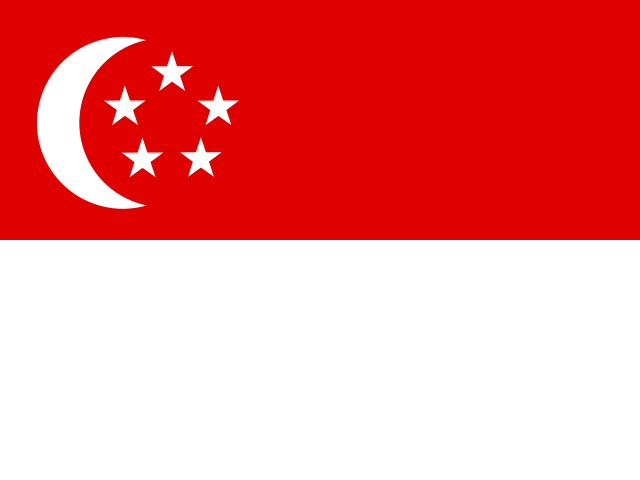
Singapore
Singapore lies at the southern tip of the Malay Peninsula, between the Strait of Malacca and the South China Sea. Its territory consists of a main island and dozens of smaller islands, with a low-lying landscape shaped by reservoirs, mangroves, and stretches of tropical forest. The Singapore River crosses the central area, while the Southern Ridges and Pulau Ubin preserve some of the island’s greener terrain.
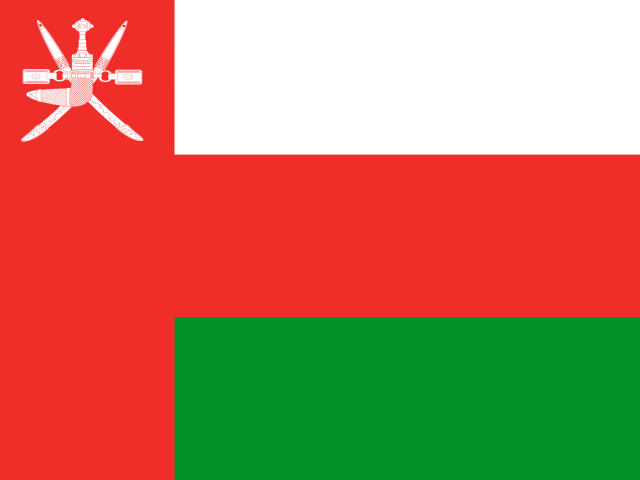
Oman
Oman lies on the southeastern edge of the Arabian Peninsula, with a long coastline facing the Arabian Sea and the Gulf of Oman. The Hajar Mountains rise sharply in the north, above gravel plains, deep wadis, and stretches of desert that extend into the Empty Quarter. In the south, Dhofar’s mountains and coastal plain receive seasonal monsoon mist, creating a greener landscape around Salalah.
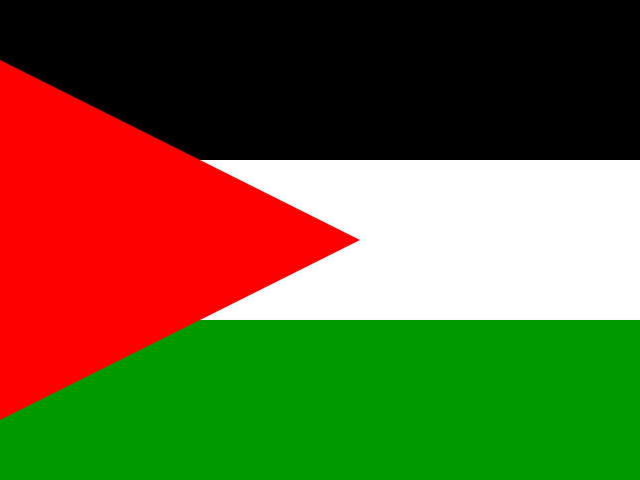
Palestinian Territory
The Palestinian Territory has a varied landscape, from Mediterranean coastline and coastal plains to limestone hills further inland. The central highlands are cut by seasonal valleys and descend eastward toward the Jordan Valley and the Dead Sea. Olive groves cover many of the gentler slopes, while drier terrain and exposed rock become more common toward the east and south.
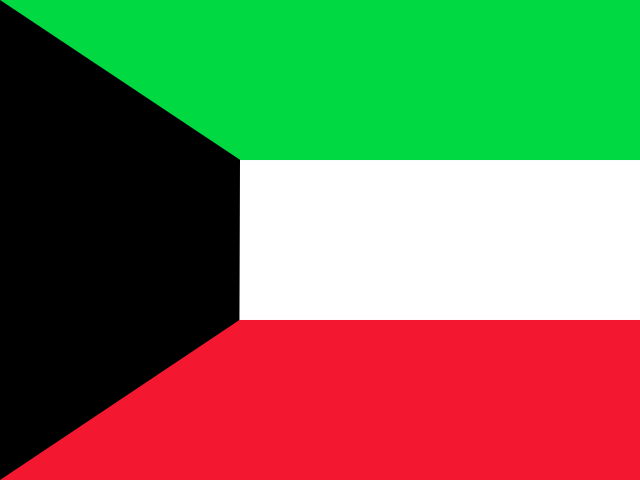
Kuwait
Kuwait lies at the northwestern edge of the Persian Gulf, where a low desert plain meets a long, gently curving coast. Much of the land is flat and dry, with gravel plains, sandy stretches, and shallow depressions shaped by wind and seasonal rain. Kuwait Bay cuts deep into the shoreline, while Bubiyan and Failaka are among the islands lying just offshore.
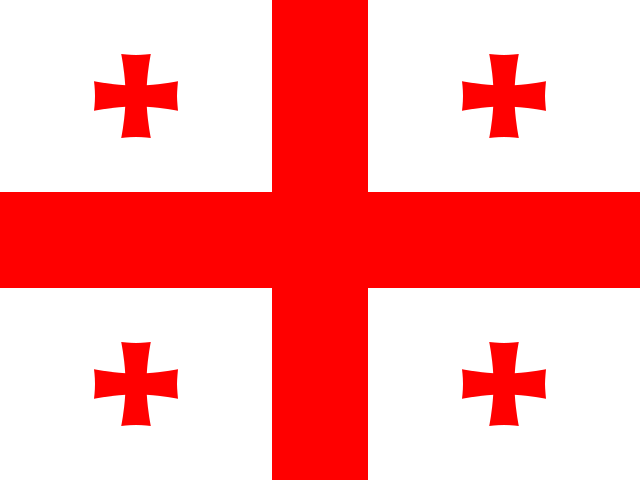
Georgia
Georgia lies between the Black Sea and the Caucasus Mountains, with the Greater Caucasus rising across the north and the Lesser Caucasus shaping the south. Broad valleys and river plains cut through the centre, while the western lowlands reach the Black Sea coast. Its landscapes range from humid subtropical forests and wetlands to dry eastern plateaus, deep gorges, and high alpine peaks.
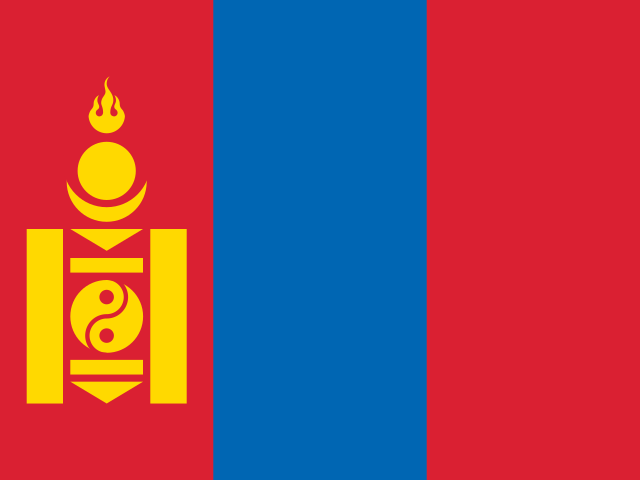
Mongolia
Mongolia lies across the high plateaus of East Asia, where broad grasslands cover much of the country. The Altai Mountains rise in the west, while the Gobi stretches across the south with rocky plains, dunes, and dry valleys. Northern Mongolia is greener, with forests, rivers, and freshwater lakes such as Lake Khövsgöl, while the Khangai and Khentii ranges shape the central and northeastern uplands.
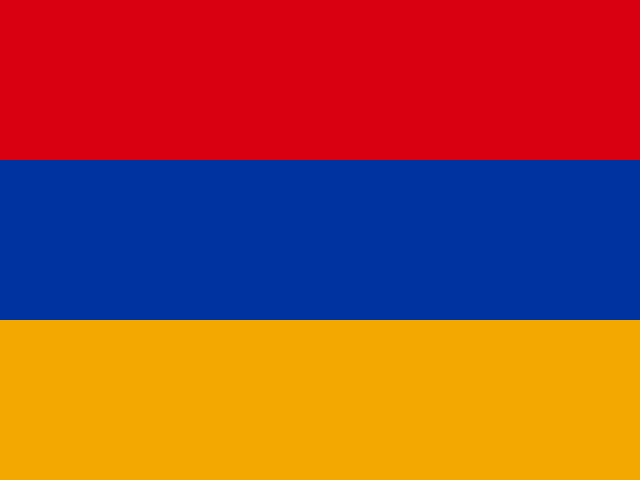
Armenia
Armenia lies in the South Caucasus, where high plateaus and mountain ranges cover much of the country. Mount Aragats is its highest point, while Lake Sevan forms a broad expanse of freshwater among the surrounding uplands. Deep river valleys and rocky gorges cut through the landscape, which shifts from dry, open terrain at lower elevations to forests and alpine meadows higher in the mountains.

Qatar
Qatar occupies a small peninsula on the eastern side of the Arabian Peninsula, with the sea surrounding it on three sides. Most of the land is low and flat, with limestone plains, gravel stretches, and sand dunes shaping the interior. Along the coast, shallow bays, tidal flats, and mangroves meet the water, while the dunes around Khor Al Adaid descend directly to an inland lagoon in the south.
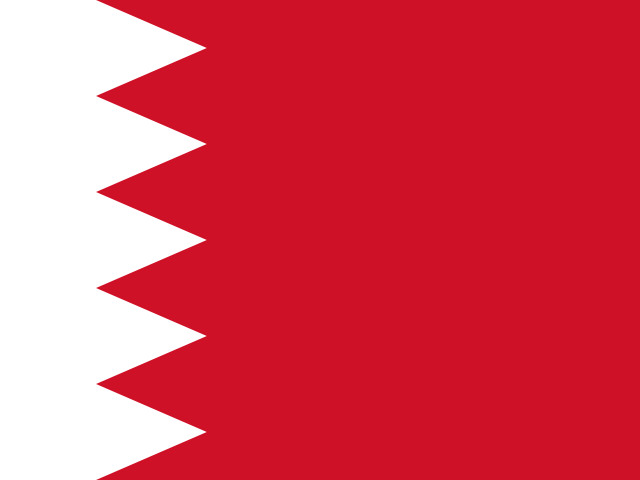
Bahrain
Bahrain is an archipelago in the Persian Gulf, close to the eastern coast of the Arabian Peninsula. The largest island is mostly low and flat, with a limestone ridge rising at Jabal ad Dukhan near its centre. Shallow bays, tidal flats, and smaller islands shape the coastline, while the interior is largely dry and open and date palms grow in the greener north.
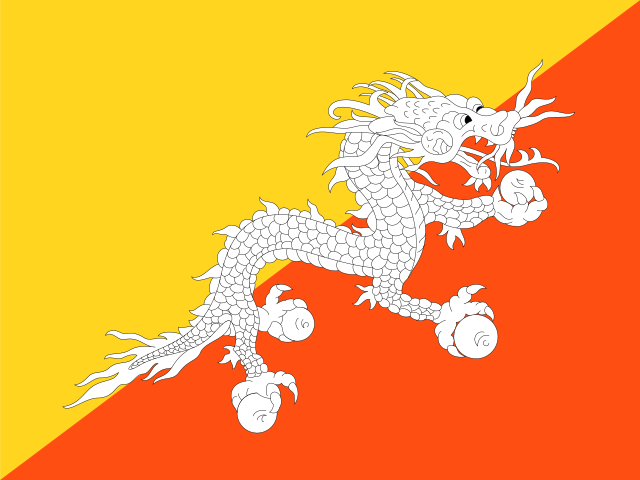
Bhutan
Bhutan lies in the eastern Himalayas, where the land rises sharply from subtropical foothills in the south to high mountain ranges in the north. Fast-flowing rivers cut deep valleys through the centre, separating forested ridges and small areas of level ground. The landscape ranges from broadleaf forests and bamboo-covered slopes to alpine meadows, glaciers, and snow-covered peaks above 7,000 metres.
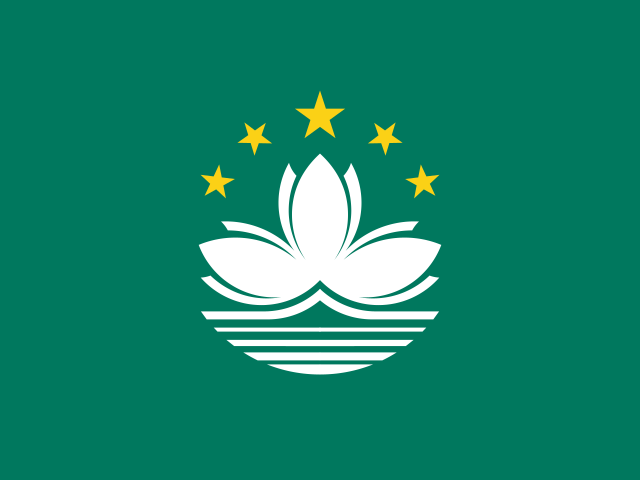
Macao
Macao lies on the southern coast of China, where the Pearl River estuary meets the South China Sea. Its compact landscape includes the Macao Peninsula, Taipa and Coloane; reclaimed land joins the two southern areas, which are shaped by low, rounded hills. Much of the shoreline has been reshaped, while Coloane retains wooded slopes, small coves, and the area’s highest point at Alto de Coloane.
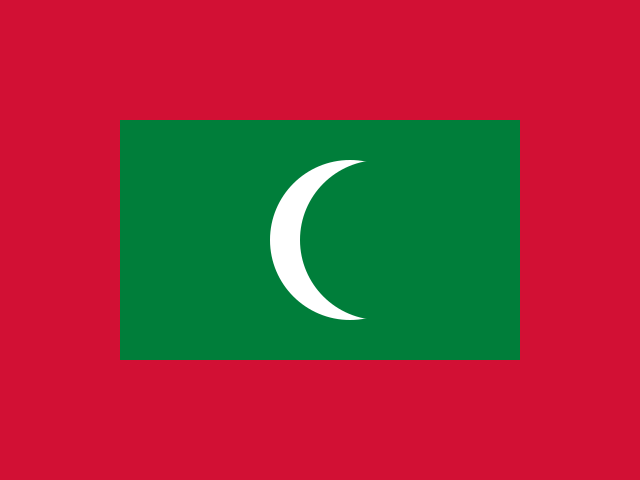
Maldives
The Maldives lies in the Indian Ocean southwest of Sri Lanka, where a chain of low coral islands stretches across 26 natural atolls. Ring-shaped reefs enclose shallow lagoons, while narrow channels connect them with the open sea. Most islands rise only slightly above the water, with sandy shores, coconut palms, and seagrass beds forming a landscape shaped closely by the surrounding ocean.
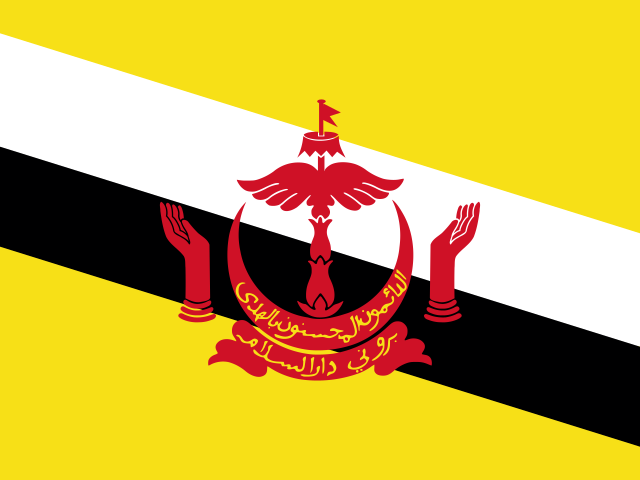
Brunei
Brunei lies on the northern coast of Borneo, facing the South China Sea, and is divided into two separate sections. Low coastal plains and broad river valleys give way to forested hills inland, with the highest ground in the east. The Belait, Tutong, Brunei, and Temburong rivers cross the country, while dense tropical rainforest covers much of its interior.