Australia
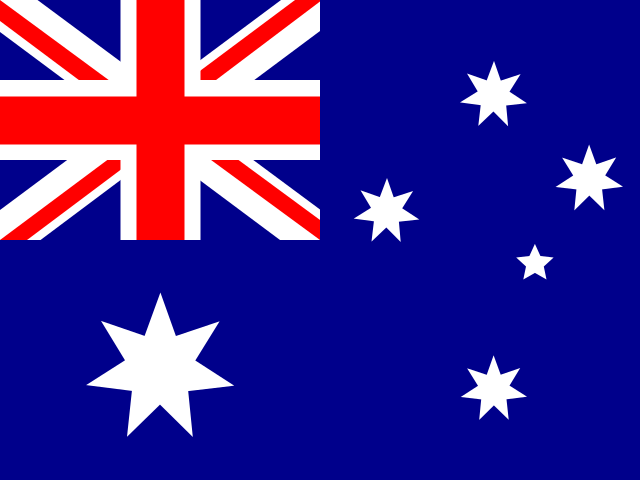
Australia lies between the Indian and Pacific oceans, with a broad coastline surrounding a vast, dry interior known as the Outback. The Great Dividing Range follows much of the east, while the centre contains red deserts, salt lakes, and the sandstone formation of Uluru. Offshore, the Great Barrier Reef extends along Queensland, and Tasmania lies across Bass Strait to the south.
Papua New Guinea
Papua New Guinea lies in the southwestern Pacific, covering the eastern half of New Guinea and hundreds of surrounding islands. A chain of rugged mountains and highland valleys runs through the mainland, while dense tropical rainforest covers much of the lower ground. The Sepik and Fly rivers cross broad wetlands, and volcanic islands, coral reefs, and sheltered bays shape the coast.
New Zealand
New Zealand lies in the South Pacific and consists mainly of the North Island and South Island, alongside many smaller islands. The Southern Alps run along much of the South Island, while the North Island contains volcanic plateaus, geothermal areas, and rolling hills. Its landscapes also include fiords, glaciers, long beaches, deep lakes, and coastal ranges shaped by the meeting of the Pacific and Australian tectonic plates.
Fiji
Fiji is an archipelago of more than 300 islands in the South Pacific, with most of its land found on Viti Levu and Vanua Levu. Both main islands have mountainous interiors, river valleys, and coastal plains, while smaller islands are scattered across the surrounding sea. Coral reefs, lagoons, mangroves, and sandy coastlines shape much of the landscape around the islands.
Solomon Islands
The Solomon Islands form a long chain of islands in the southwestern Pacific, east of Papua New Guinea. Most of the larger islands are mountainous and volcanic, with rainforest-covered ridges, narrow valleys, and coastlines edged by coral reefs. Smaller islands include low coral atolls, while Guadalcanal is home to Mount Popomanaseu, the country’s highest point.

Vanuatu
Vanuatu is an island country in the South Pacific, made up of a long chain of volcanic islands between Australia and Fiji. Its landscape includes forested mountains, active volcanoes, coral reefs, and beaches shaped by the surrounding ocean. Espiritu Santo is the largest island, while Mount Tabwemasana is the country’s highest point and Mount Yasur on Tanna is one of its best-known natural landmarks.
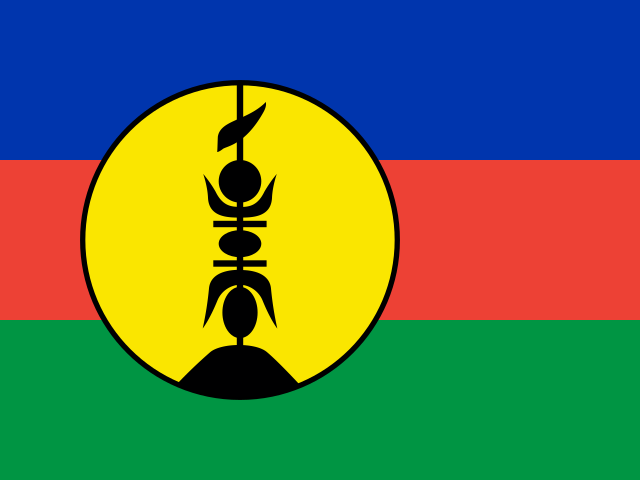
New Caledonia
New Caledonia lies in the southwest Pacific, east of Australia, and includes the long main island of Grande Terre alongside the Loyalty Islands, the Isle of Pines, and smaller islands. A mountain range runs along Grande Terre, with narrow coastal plains, rivers, forests, and areas of dry woodland. Much of the island group is surrounded by a broad lagoon and an extensive barrier reef.
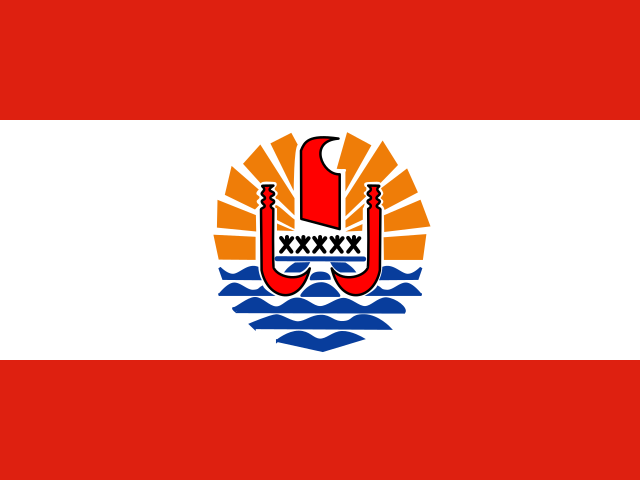
French Polynesia
French Polynesia comprises 118 islands and atolls spread across five archipelagos in the South Pacific. Tahiti and many of the other high islands are volcanic, with steep central peaks, deep valleys, and coral reefs along their coasts. The low-lying Tuamotu atolls form broad rings around lagoons, while the Marquesas rise sharply from the ocean with rugged ridges and cliffs.
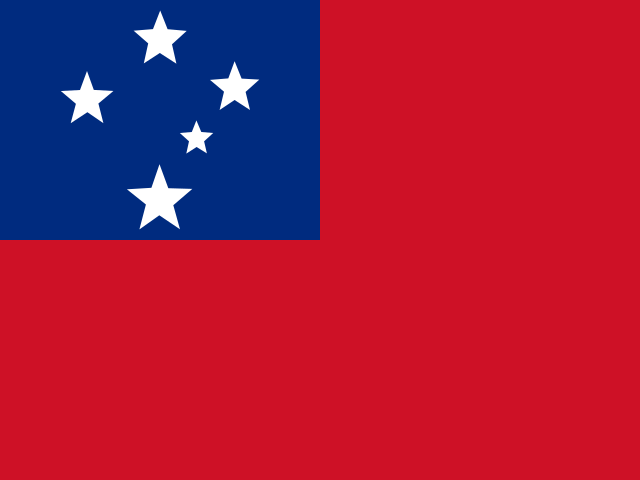
Samoa
Samoa lies in the central South Pacific and consists mainly of the volcanic islands of Upolu and Savai‘i, together with several smaller islands. Mountainous interiors, rainforest, river valleys and waterfalls shape much of the landscape, with Mount Silisili forming the highest point. Along the coast, lava fields and sea cliffs give way to beaches, lagoons and coral reefs.
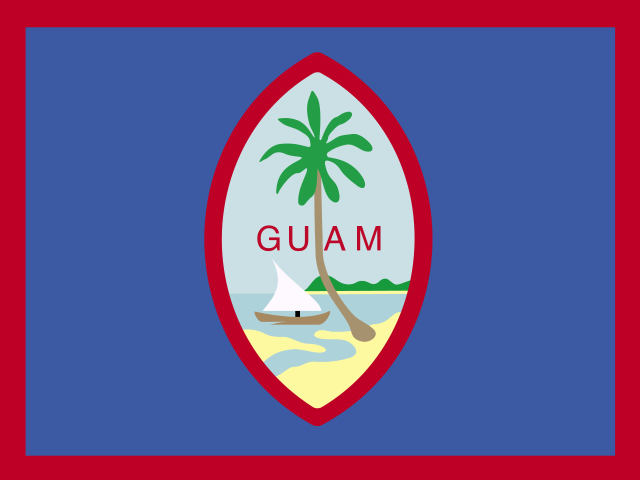
Guam
Guam is the largest and southernmost of the Mariana Islands, set in the western Pacific Ocean. A broad limestone plateau covers much of the north, while volcanic hills shape the south, rising to Mount Lamlam. Coral reefs fringe much of the coastline, which also includes sandy beaches, sheltered bays, rocky headlands, and steep coastal cliffs.
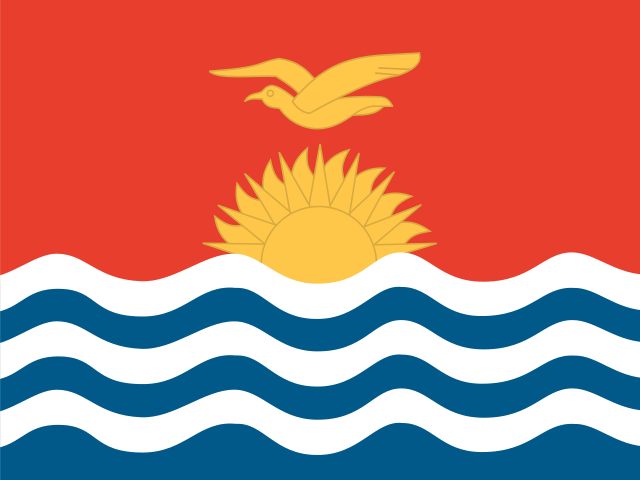
Kiribati
Kiribati is spread across a vast area of the central Pacific, with 33 islands divided among the Gilbert, Phoenix, and Line island groups. Most are low-lying coral atolls encircling lagoons, while Banaba is a raised coral island. The islands lie on both sides of the equator, and their surrounding reefs, narrow strips of land, and wide stretches of ocean define the country’s geography.
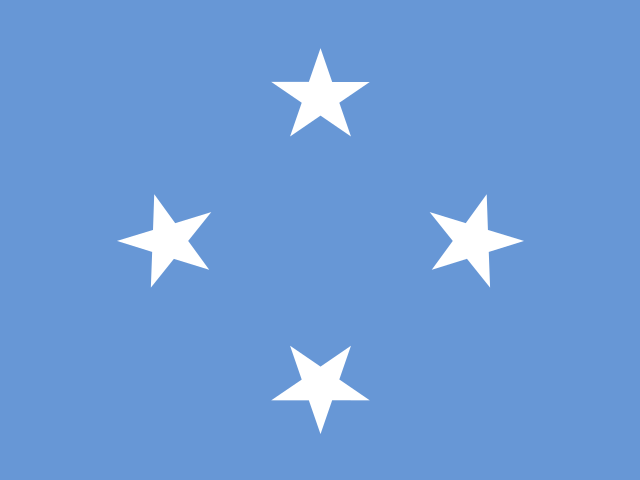
Micronesia
Micronesia is made up of more than 600 islands scattered across a vast stretch of the western Pacific Ocean. These include the high volcanic islands of Pohnpei and Kosrae, the broad lagoon of Chuuk, and the islands and atolls around Yap. Coral reefs, mangrove-lined shores, forested mountains, and shallow lagoons shape much of the archipelago.
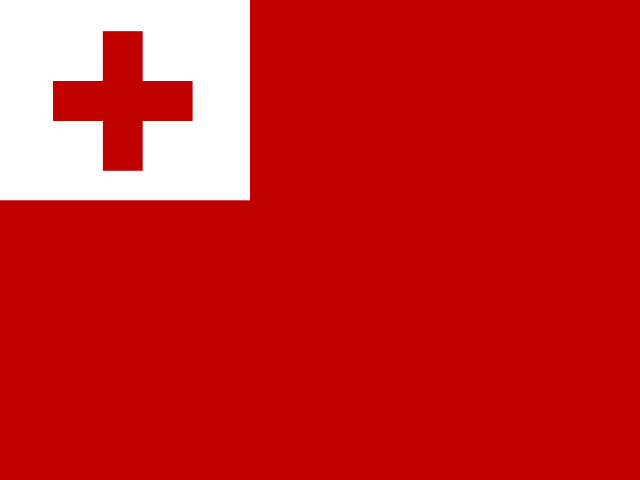
Tonga
Tonga is an island country in the South Pacific, made up of more than 170 islands spread across several groups. Its western islands are volcanic and rise sharply from the sea, while many eastern islands are lower and formed from coral limestone. Tongatapu is edged by reefs and lagoons, and the Vavaʻu and Haʻapai groups contain sheltered channels, small islands, and long stretches of coastline.
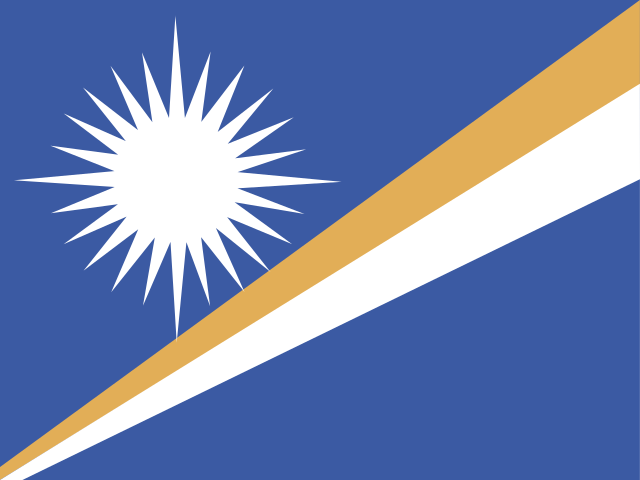
Marshall Islands
The Marshall Islands lie in the central Pacific, where hundreds of low-lying coral islets form a long arc across a vast stretch of ocean. Their 29 atolls and five individual islands are arranged in two roughly parallel chains, with narrow strips of land enclosing broad lagoons. Kwajalein surrounds one of the world’s largest lagoons, while reefs, sandy shores, and channels between the islets shape the rest of the landscape.
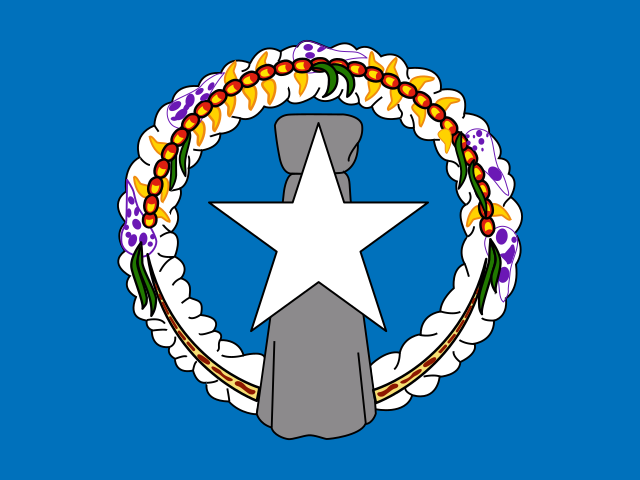
Northern Mariana Islands
The Northern Mariana Islands form a north–south chain of 14 islands in the western Pacific Ocean. Saipan, Tinian, and Rota are the largest inhabited islands in the south, where raised limestone terraces meet coral reefs and sandy coves. Farther north, steep volcanic islands rise from deep ocean waters, with the Mariana Trench running along the eastern side of the archipelago.
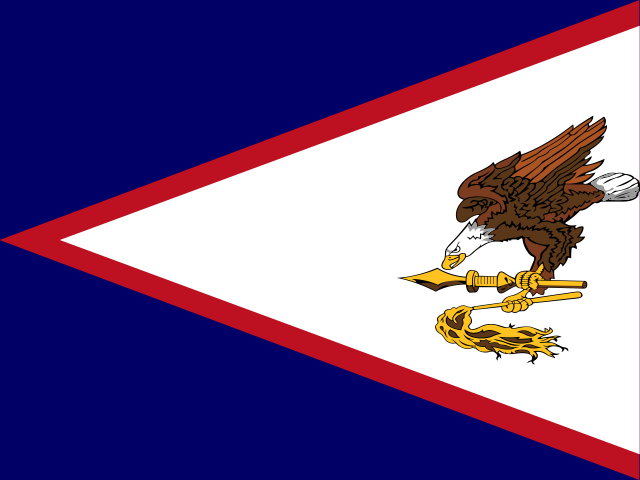
American Samoa
American Samoa lies in the South Pacific and consists of five volcanic islands and two coral atolls. Tutuila, the largest island, has a steep mountainous interior cut by narrow valleys, while Pago Pago Harbour forms a deep inlet in its southern coast. Farther east, the Manuʻa Islands rise sharply from the ocean, and coral reefs surround much of the archipelago.
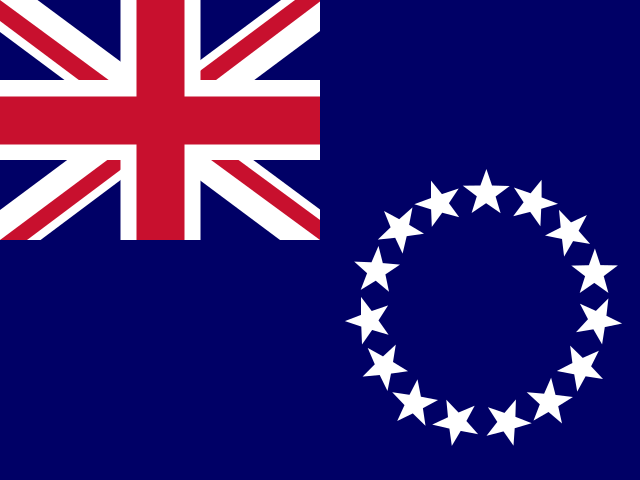
Cook Islands
The Cook Islands are a group of 15 islands scattered across a wide stretch of the South Pacific. The northern islands are mostly low coral atolls, while the southern group includes older volcanic islands with forested hills and fertile valleys. Rarotonga rises steeply around its mountainous interior, and Aitutaki is ringed by a broad lagoon dotted with small islets.
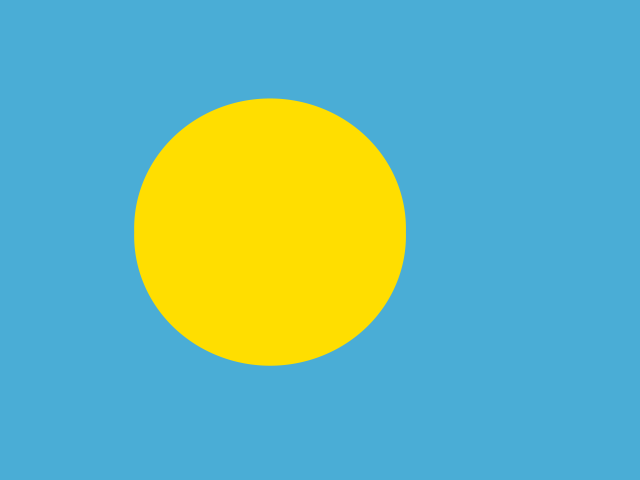
Palau
Palau is an archipelago in the western Pacific, made up of hundreds of volcanic and limestone islands surrounded by coral reefs. Babeldaob, its largest island, has forested hills, rivers, mangroves, and a deeply indented coastline. South of Koror, the rounded limestone islets of the Rock Islands rise from a broad lagoon dotted with marine lakes and shallow reef channels.
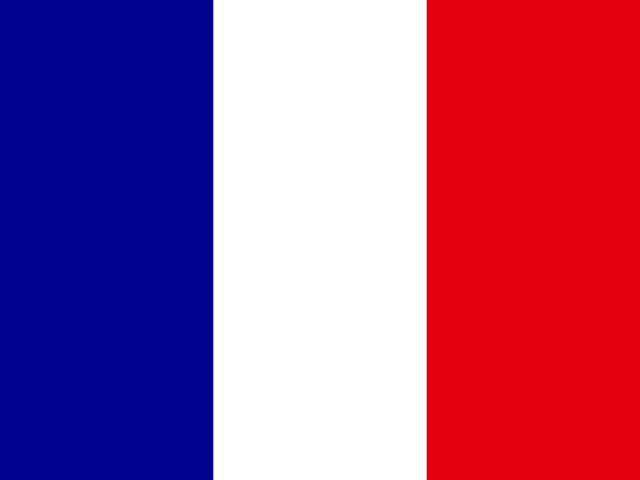
Wallis and Futuna
Wallis and Futuna lies in the South Pacific and consists of three main volcanic islands—Wallis, Futuna, and Alofi—along with smaller islets. Wallis is encircled by a barrier reef and broad lagoon, with crater lakes scattered across its interior. Futuna and nearby Alofi are steeper and more mountainous, with forested ridges, narrow coastal plains, rocky shores, and coral reefs.
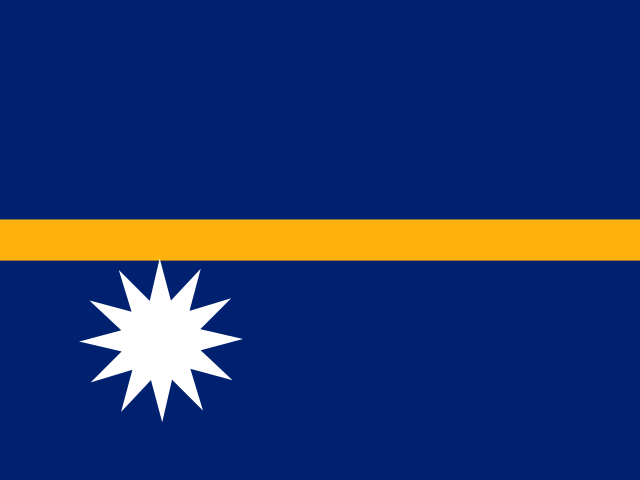
Nauru
Nauru is a small, roughly oval coral island in Micronesia, just south of the equator in the central Pacific. A narrow coastal plain circles the island, while the land rises inland to a limestone plateau known as Topside, with Command Ridge as its highest point. Buada Lagoon lies within the interior, and a fringing coral reef surrounds most of the shoreline.
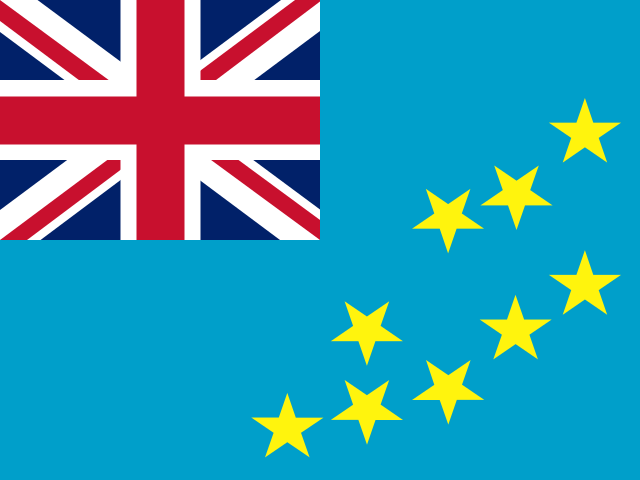
Tuvalu
Tuvalu is a chain of nine small coral islands scattered across the central Pacific, roughly halfway between Hawaii and Australia. Six are atolls built around lagoons, while the other three are reef islands, and no part of the country rises far above the sea. Funafuti has the largest lagoon, bordered by narrow islets, coral reefs, and shallow channels connecting it to the open ocean.
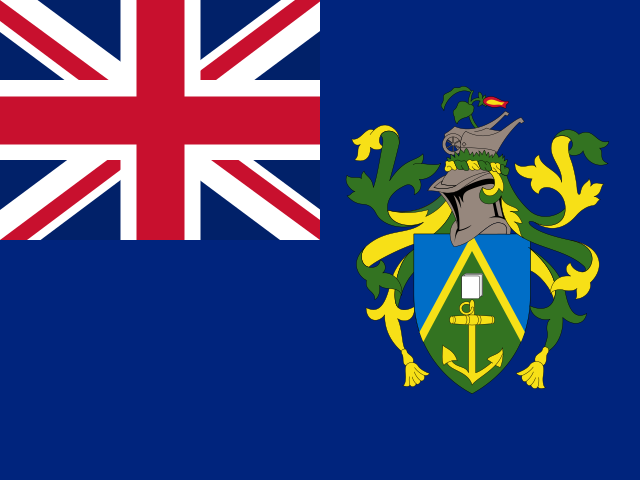
Pitcairn
Pitcairn consists of four small islands scattered across a remote part of the southern Pacific. Pitcairn Island is volcanic, with rugged hills, narrow valleys, and a rocky coast lined by steep lava cliffs, while Henderson is a raised coral atoll with limestone cliffs and dense vegetation. Oeno and Ducie are low coral atolls, where sandy islets and reefs enclose shallow lagoons.
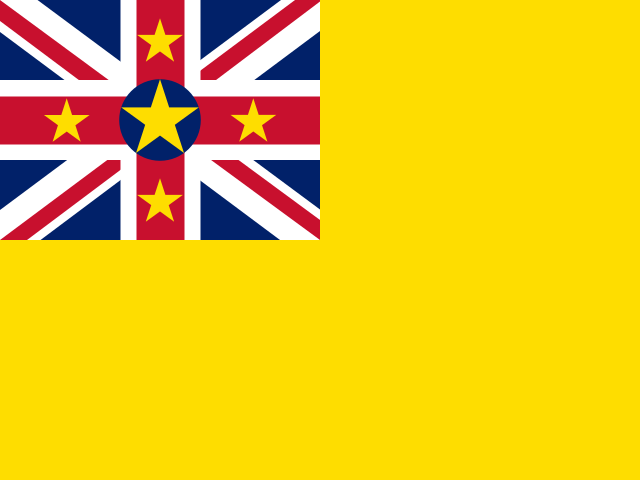
Niue
Niue is a raised coral island in the South Pacific, with a broad limestone plateau rising above a narrow coastal terrace. Steep cliffs, caves, and deep chasms shape much of its shoreline, while a coral reef closely surrounds the island. There are no permanent rivers or lakes, and rainwater filters through the porous rock into underground freshwater reserves.
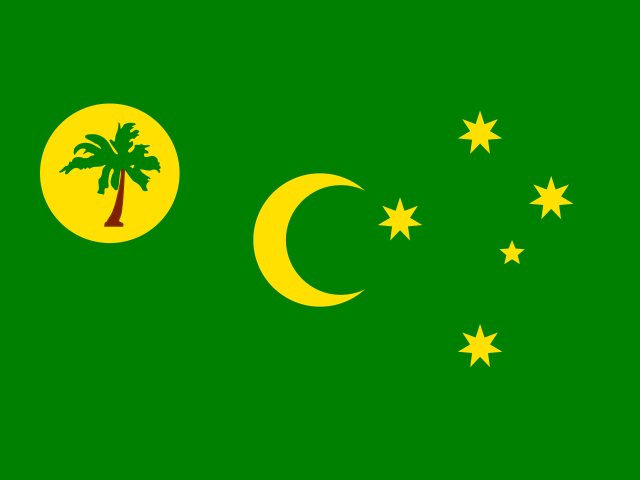
Cocos Islands
The Cocos Islands lie in the eastern Indian Ocean and consist of 27 low-lying coral islands grouped into two atolls. North Keeling almost completely encloses its lagoon, while the South Keeling atoll is made up of numerous narrow islets. Coconut palms cover much of the land, and coral reefs, sandy shores, and shallow lagoons surround the islands.
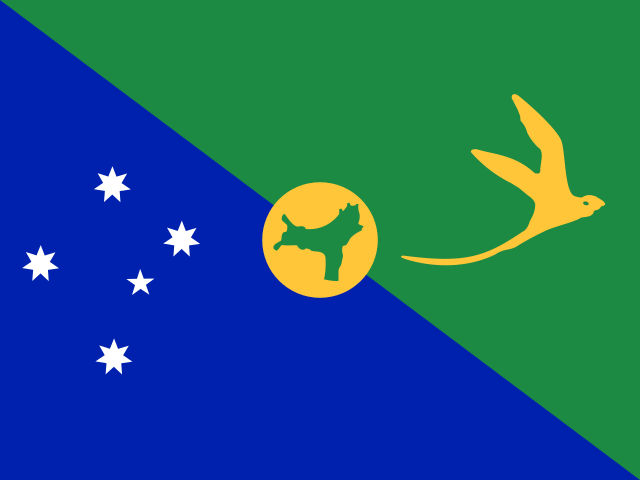
Christmas Island
Christmas Island rises from the Indian Ocean as a steep-sided plateau, with limestone over volcanic rock and cliffs around much of the coast. Dense rainforest covers the interior, broken by caves, freshwater springs, and short streams descending towards the sea. Narrow beaches and coral reefs fringe the shoreline, while the annual movement of millions of red crabs from the forest to the coast is one of the island’s most distinctive natural events.
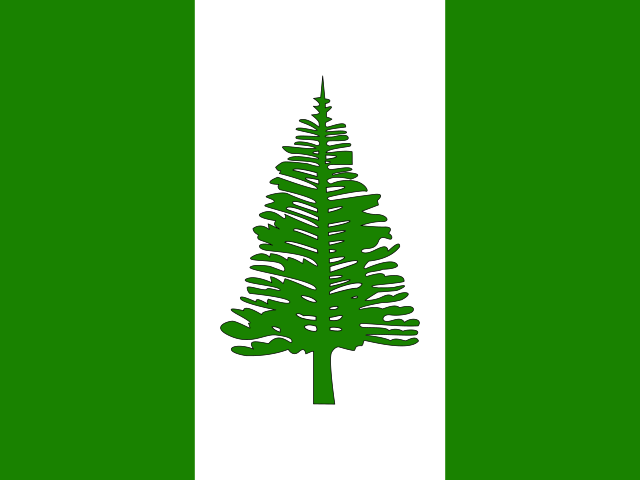
Norfolk Island
Norfolk Island lies in the South Pacific between New Caledonia and New Zealand, with steep coastal cliffs surrounding a central plateau. Mount Bates and Mount Pitt rise above 300 metres in the north, amid subtropical forest and stands of Norfolk Island pine. To the south, Phillip Island has exposed red slopes and wave-cut rock platforms, while tiny Nepean Island is formed from limestone.
Tokelau
Tokelau consists of three low coral atolls in the South Pacific, north of Samoa. Atafu, Nukunonu, and Fakaofo are each formed by narrow chains of small islets enclosing broad lagoons, with no point rising far above the ocean. Coral reefs, sandy shores, and dense stands of coconut palms define the landscape, while reef passages connect the sheltered lagoon waters with the open Pacific.

United States Minor Outlying Islands
The United States Minor Outlying Islands are scattered across the central Pacific, apart from Navassa Island in the Caribbean. The group includes low coral islands, atolls, reefs, and the raised limestone landscape of Navassa. Palmyra is covered by dense tropical vegetation, while Midway and Wake enclose broad lagoons and Kingman Reef barely rises above the surrounding sea.
Heard Island and McDonald Islands
Heard Island and the McDonald Islands lie in the southern Indian Ocean, in a remote subantarctic setting. Heard Island is dominated by the glaciated Big Ben massif, whose summit, Mawson Peak, is an active volcano, while steep valleys descend towards narrow beaches. The smaller McDonald Islands are also volcanic, with bare rock, sea cliffs, and surrounding waters shaped by strong winds and waves.