Brazil covers much of eastern and central South America, with a long Atlantic coast and a territory reaching deep into the continent. The Amazon Basin spreads across the north, where the Amazon River and its tributaries flow through the world’s largest tropical rainforest. Farther south, the Brazilian Highlands, Pantanal wetlands, Iguaçu Falls, and mountain ranges along the Atlantic coast create a wide variety of landscapes.
Colombia lies in northwestern South America, with coastlines on both the Caribbean Sea and Pacific Ocean. The Andes divide into three mountain ranges as they cross the west, separated by the valleys of the Magdalena and Cauca rivers. Beyond the mountains, the land opens into the Llanos grasslands and the Amazon rainforest, while the Sierra Nevada de Santa Marta rises close to the Caribbean coast.
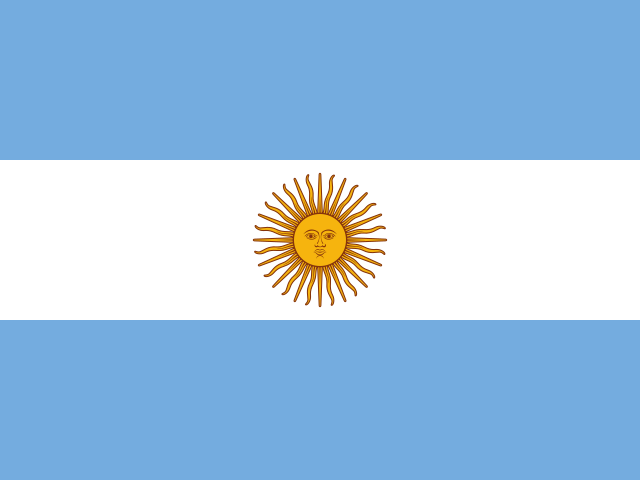
Argentina stretches along southern South America, from the subtropical north to Tierra del Fuego at the continent’s southern tip. The Andes form its western edge, while the Pampas spread across the centre and the windswept plains and plateaus of Patagonia cover much of the south. Its landscapes also include Iguazú Falls, vast wetlands, glaciers, and a long Atlantic coastline.
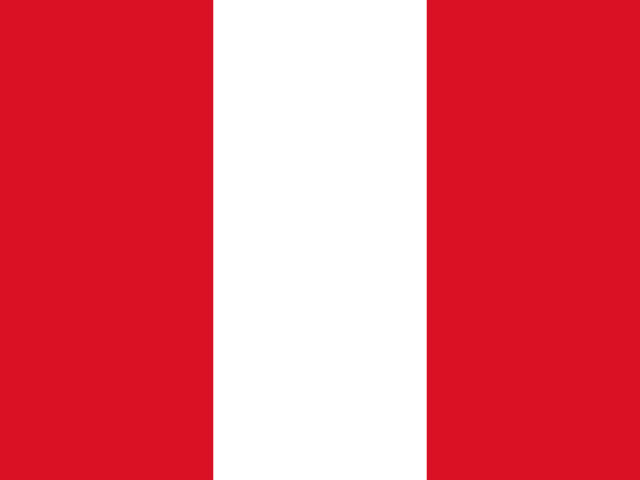
Peru lies on the Pacific coast of western South America, where a narrow coastal plain rises into the Andes. East of the mountains, rivers descend into the Amazon Basin, which covers much of the country with tropical rainforest. Its landscapes include the high Altiplano, Lake Titicaca, deep valleys such as Colca Canyon, and peaks rising above 6,000 metres.
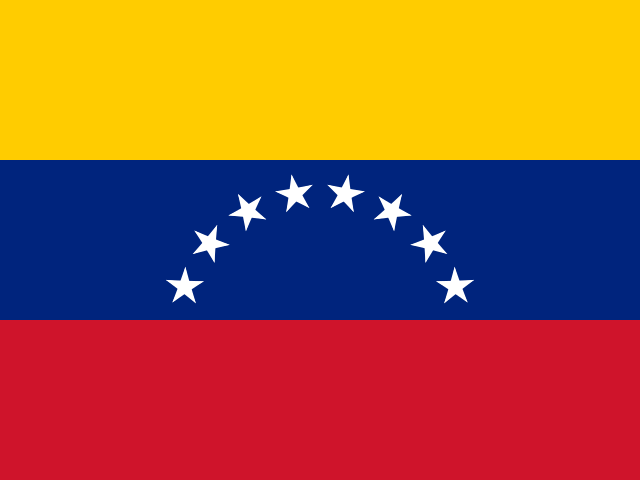
Venezuela lies on the northern coast of South America, facing the Caribbean Sea. The Andes rise in the west, while the Orinoco River crosses broad tropical plains before reaching a vast delta on the Atlantic coast. Farther south, the Guiana Highlands contain flat-topped tepuis, dense rainforest, and Angel Falls, which drops from the edge of Auyán-tepui.
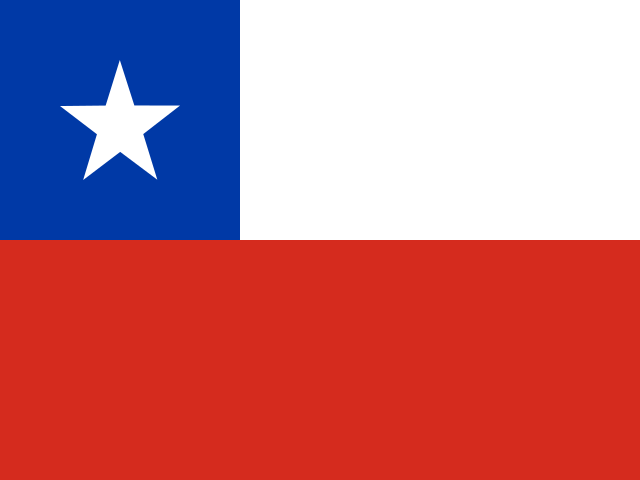
Chile forms a long, narrow strip along the Pacific coast of South America, with the Andes rising to the east. Its landscapes stretch from the Atacama Desert in the north through central valleys to the forests, fjords, and ice fields of Patagonia. The country also includes many Pacific islands, among them Rapa Nui, and has an exceptionally long coastline shaped by bays, channels, and archipelagos.
Ecuador lies on the equator in northwestern South America, where the Andes cross the country between the Pacific coast and the Amazon Basin. Its landscapes range from high volcanic peaks and cloud forests to coastal plains and tropical rainforest. Far offshore, the Galápagos Islands form a volcanic archipelago inhabited by giant tortoises, marine iguanas, and many other distinctive species.
Bolivia is a landlocked country in central South America, where the Andes rise across the west and lower plains extend towards the Amazon basin in the north and east. The Altiplano contains Lake Titicaca and the vast Salar de Uyuni, the largest salt flat in the world. Farther east, the landscape shifts through dry valleys and wetlands to tropical forest.
Paraguay lies near the centre of South America, where the Paraguay River divides the country into two broad landscapes. Eastern Paraguay has rolling hills, subtropical forests, grasslands, and rivers that feed the Paraná. To the west, the Gran Chaco spreads across a vast low plain of dry woodland, savanna, and seasonal wetlands, with the Pilcomayo River running along its southern reaches.
Uruguay lies on the Atlantic coast of South America, where the broad Río de la Plata opens into the ocean. Rolling grasslands and low ridges known as cuchillas cover much of the interior, crossed by a dense network of rivers and streams. Along the coast, sandy beaches and dunes give way to lagoons, wetlands, and the rocky headlands around Cabo Polonio.
Guyana lies on the northeastern coast of South America, where a low coastal plain faces the Atlantic Ocean. Much of the interior is covered by rainforest, with rivers including the Essequibo running through the country. Farther inland, the land rises into the Guiana Highlands, where Kaieteur Falls drops from a sandstone plateau into the forest below.
Suriname lies on the northeastern coast of South America, facing the Atlantic Ocean. A narrow coastal plain of rivers, wetlands, and mangrove forests gives way inland to rolling terrain and the densely forested Guiana Highlands. Much of the country is covered by tropical rainforest, crossed by the Suriname, Coppename, and Marowijne rivers, while the Wilhelmina Mountains rise in the remote southern interior.
French Guiana lies on the northeastern coast of South America, between the Atlantic Ocean and the forested uplands of the Guiana Shield. Dense tropical rainforest covers most of the interior, crossed by rivers including the Maroni and Oyapock as they flow north towards the sea. Along the coast, low plains, mangroves, wetlands, and shifting mudflats create a landscape quite different from the hills farther inland.
The Falkland Islands form a South Atlantic archipelago of two main islands and hundreds of smaller ones, with long, deeply indented coastlines. Low mountain ranges, open moorland, peat bogs, and tussac grass shape the interior, while sheltered bays and rocky cliffs line the shores. The surrounding waters and smaller islands support large colonies of penguins and other seabirds, along with seals and sea lions.
South Georgia and the South Sandwich Islands lie in the southern Atlantic, where steep mountains rise behind narrow coastal plains and deeply indented shores. South Georgia is crossed by the Allardyce and Salvesen ranges, with glaciers flowing from its snow-covered interior into bays along the coast. Farther southeast, the South Sandwich Islands form a curved chain of eleven volcanic islands beside the deep South Sandwich Trench.
Bouvet Island rises from the South Atlantic as the exposed summit of a volcano near the southern end of the Mid-Atlantic Ridge. Glaciers cover nearly nine-tenths of its 49-square-kilometre surface, while steep cliffs surround much of the coast. Olavtoppen, on the rim of an old crater, reaches 780 metres, and the ice-covered interior gives way to bare rock in places along the shoreline.